
If you have ten or twelve weeks in New York for a summer internship, the neighborhood you pick is doing more work than you think it is. For people who live in New York permanently, the neighborhood is mostly a long-running negotiation between rent, commute, and where their friends are. For a summer intern, that negotiation compresses into a few decisive trade-offs. The neighborhood you choose for those twelve weeks is, in practice, the city you experience.
This is a comparison piece. The goal is not to argue for any one neighborhood at the expense of the others. Every Manhattan and inner-Brooklyn neighborhood does some things better than every other neighborhood. The goal is to lay out the trade-offs honestly so that an intern arriving in May or June can make the choice with the right framing.
The five factors that matter
Before walking through the neighborhoods, the five factors that interns weigh, ranked by how often we hear them raised:
- Commute time and reliability to the work address.
- All-in monthly housing cost: not the headline rent, the all-in figure once utilities and internet and any move-in fees are added.
- Social density for someone arriving with no existing network.
- Quiet at night, the most underrated factor for a twelve-week stay because sleep debt compounds.
- Access to weekend recovery space: parks, water, neighborhoods to walk in that are not your work neighborhood.
Different interns weight these differently. Banking and consulting interns who plan to be in the office twelve hours a day put commute and quiet at the top. Students on a research fellowship or a media internship with a more flexible schedule put social density first. Internships that involve real travel within the city (real estate site visits, agency client meetings) put transit centrality first. Knowing your own weighting matters more than any neighborhood-by-neighborhood comparison.
Upper West Side
The Upper West Side runs from roughly 59th Street to 110th, between Central Park on the east and the Hudson River on the west. It is residential, family-heavy, and quiet in a way that other Manhattan neighborhoods are not. The streets are mostly tree-lined; the avenues are mostly prewar apartment buildings with retail at street level.
For an intern, the Upper West Side scores well on three of the five factors. Commute is strong: the 1 train runs the length of the avenue and gets to Times Square in fifteen minutes and the Financial District in about thirty-five; the B and C trains on Central Park West get to Midtown East in twelve minutes. Cost is moderate to high depending on the building model. Traditional one-bedroom rentals are around the same price as comparable East Village stock, but furnished coliving rooms on the Upper West Side on the all-inclusive model run lower than comparable corporate housing.
Where the UWS dominates is on the last two factors. Central Park is east. Riverside Park is west. Very few neighborhoods in Manhattan are within five minutes of two major parks in opposite directions, and the UWS is the most consistent of them. And the quiet: the UWS is genuinely residential at night. After 9 pm the avenues thin out, the side streets are nearly empty, and an intern coming home after a long day actually sleeps. For a twelve-week summer, that compounds.
The trade-off is social density. The UWS is families, older adults, and students from Columbia, Juilliard, and the music schools, not the post-grad bar scene that an intern looking for instant social network might want. The East Village does that better.
Midtown East / Midtown West
Midtown is the central business district. For interns whose office is in a Midtown tower (most of media, finance, consulting, advertising), the case for Midtown is that the commute disappears. You walk to work. On a 95-degree July day, that is real.
The cost case is weaker. Midtown rents per square foot are among the highest in Manhattan, the inventory skews toward newer high-rises with full-amenity charges, and corporate housing operators concentrate inventory here at $5,500–$8,000 per month for a studio. Interns paying their own way are usually priced out; interns on employer-paid relocation are usually the ones who end up here.
The harder trade-off is the experience. Midtown shuts down at night. Restaurants close earlier than in the residential neighborhoods. The streets are office workers Monday through Friday and tourists on the weekend; the actual residential life is thin. For a four-week corporate stay, this is fine. For a twelve-week summer, the lack of neighborhood is a real cost. For comparison numbers on the corporate-housing side specifically, see the corporate housing vs coliving NYC breakdown.
Midtown wins for the intern whose only goal is minimum commute time. Otherwise the trade-offs are tougher than the brochure suggests.
East Village and Lower East Side
The East Village and Lower East Side are the obvious social answer. The bar density is the highest in Manhattan; the restaurant density is among the highest; the demographic skews twenty-something. Interns who arrive with no network and want one fast tend to head here.
The trade-offs are commute, cost, and noise. The East Village is on the L and the F and the 6, workable for Midtown East and Lower Manhattan offices, slower for Midtown West, longer for the Financial District than the schedule suggests. Cost for furnished short-stay is comparable to the UWS at the headline level but the inventory skews toward sublets and walk-up buildings that often lack in-unit air conditioning, which matters more in a New York July than the average lease imagines.
Noise is the under-reported issue. Bar streets do not get quiet at 11 pm; they get quieter around 3 am, and the early-morning trash pickup and delivery cycle is loud. For an intern doing twelve to fourteen hour days in finance or consulting, this stacks up against sleep quality. For an intern on a more flexible schedule who specifically wants the social density, this is fine. The trade-off is conscious.
The honest summary: the East Village is correct if social density is the top priority and commute and sleep are second-tier. It is not correct if the priorities flip.
Financial District and Battery Park
The Financial District ("FiDi") and Battery Park City are the southern tip of Manhattan. For interns whose office is downtown (investment banks, asset management firms, some legal), the commute disappears the same way it does for Midtown interns whose office is in Midtown.
The trade-off is dead nights and weekends. The Financial District is the most office-heavy submarket in the city, and the post-pandemic residential build-out has not yet filled the gap. Streets are quiet but in a sterile way; restaurant inventory at night is thin; weekend transit out of the neighborhood means going through major transfer points. Battery Park City is more residential and is actually well-served by parks (Hudson River, Battery Park itself), but the rents have caught up.
Cost runs slightly under Midtown but above the East Village and the UWS for comparable furnished inventory. The commute to anywhere north of 14th Street is non-trivial.
For interns whose entire job and most of their social calendar will be in finance and downtown, FiDi or Battery Park can work. For interns who want a clean break between work and the rest of the city, the geography fights against it.
Williamsburg and inner Brooklyn
Williamsburg, Dumbo, and a couple of Brooklyn Heights blocks are the Brooklyn options that an intern usually considers. The case for inner Brooklyn is part cost (rents on the bedroom side are typically 10–20 percent lower than comparable Manhattan), part social (Williamsburg specifically still has a strong twenty-something scene), and part lifestyle (the East River, the Brooklyn Bridge walk, neighborhoods that feel like neighborhoods).
The trade-offs are commute and Sunday-night transit. The L train into Manhattan was the historic answer; service has improved since the long shutdown, but Sunday and late-night service still degrades. Dumbo is closer to Lower Manhattan via the F or A; Williamsburg is closer to Union Square / East Village via the L. From any of these, getting to Midtown West for a 9 am call is forty-five minutes door to door on a good day.
For an intern who values a real neighborhood and accepts the commute as the price, inner Brooklyn is a defensible choice. For an intern whose work schedule will routinely run past midnight, the late-night transit reliability becomes a real friction.
Putting the comparison together
A simple way to put the comparison together for a twelve-week summer:
- If your office is in Midtown and you will be there twelve hours a day, the Upper West Side beats Midtown on every factor except raw commute time, and the raw commute on the 1 or the B/C is twelve to twenty minutes.
- If your office is downtown and you will be there twelve hours a day, the choice is the Upper West Side (35-minute 1-train commute, real neighborhood) versus FiDi / Battery Park (zero commute, dead nights). The honest answer depends on whether you want the city for the twelve weeks or just the job.
- If your office is flexible and your priority is social density, the East Village wins. The trade-off is sleep, which compounds across twelve weeks.
- If your priority is cost above all else, Williamsburg and inner Brooklyn are the cleanest answer; the commute is the price.
For broader context on the intern housing decision, the NYC summer intern housing page covers the full decision frame, and the NYC intern housing checklist covers the twelve items to verify with any operator regardless of neighborhood.
The quiet default argument for the UWS
Across the trade-offs above, the Upper West Side keeps appearing as the second-best option on most individual factors and the best option on the combined set. The commute is shorter than Brooklyn and shorter than most people guess from Midtown; the cost is moderate compared with Midtown and FiDi; the park access is best in Manhattan; the night-time quiet is real; and the proximity to Columbia, Juilliard, and the music schools produces a steady twenty-something population that an intern can plug into without the East Village trade-offs.
That is the case for the Upper West Side as the quiet default: not the most exciting answer on any single dimension, but the answer that holds up across twelve weeks of an actual summer.
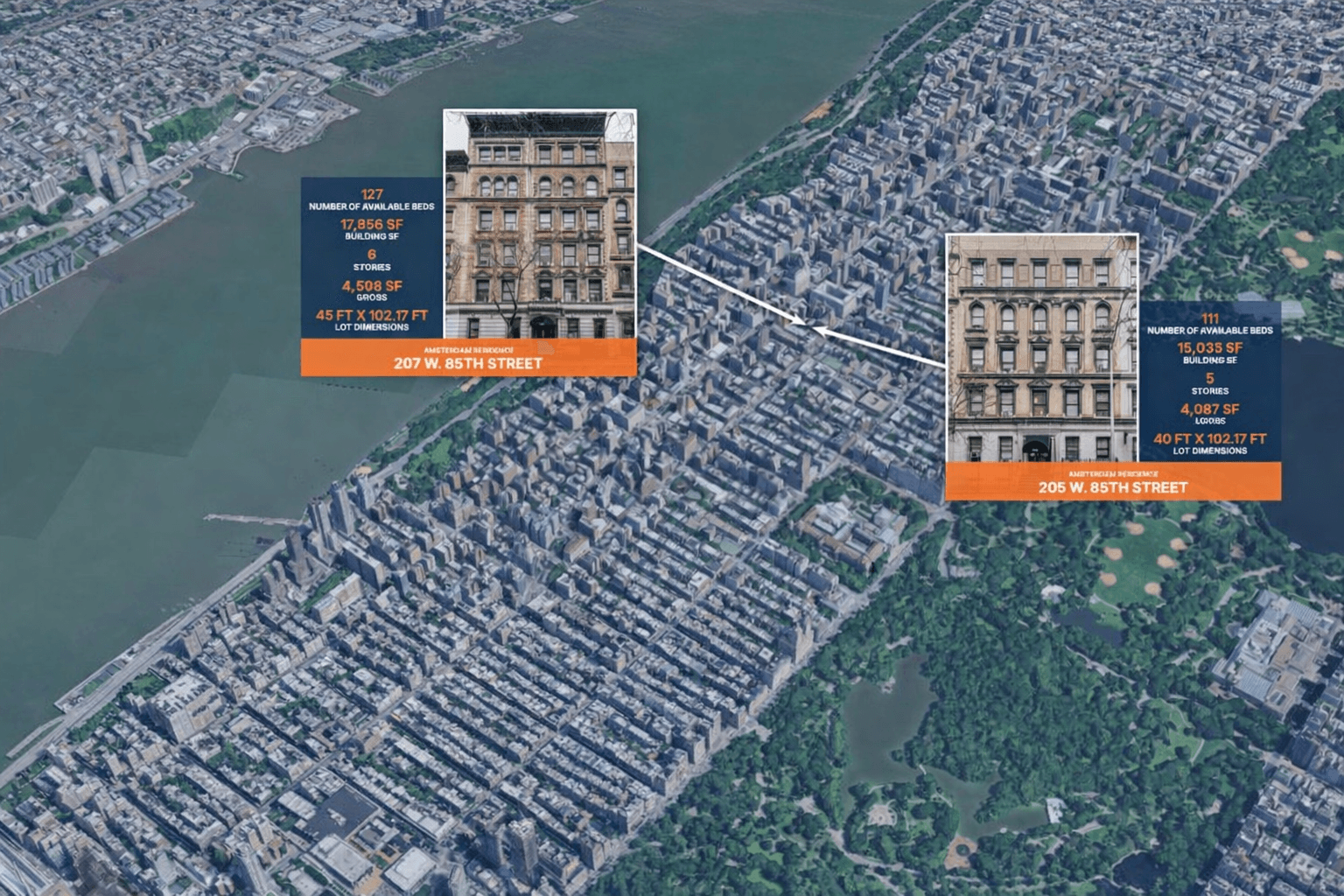
If you are evaluating Upper West Side options specifically, the furnished short-stay coliving model we run at 205 and 207 West 85th Street is built around the twelve-week intern stay: four-week minimum, all-inclusive billing, no broker fee, no US credit or guarantor required. Apply or reserve a room when the dates are right.