
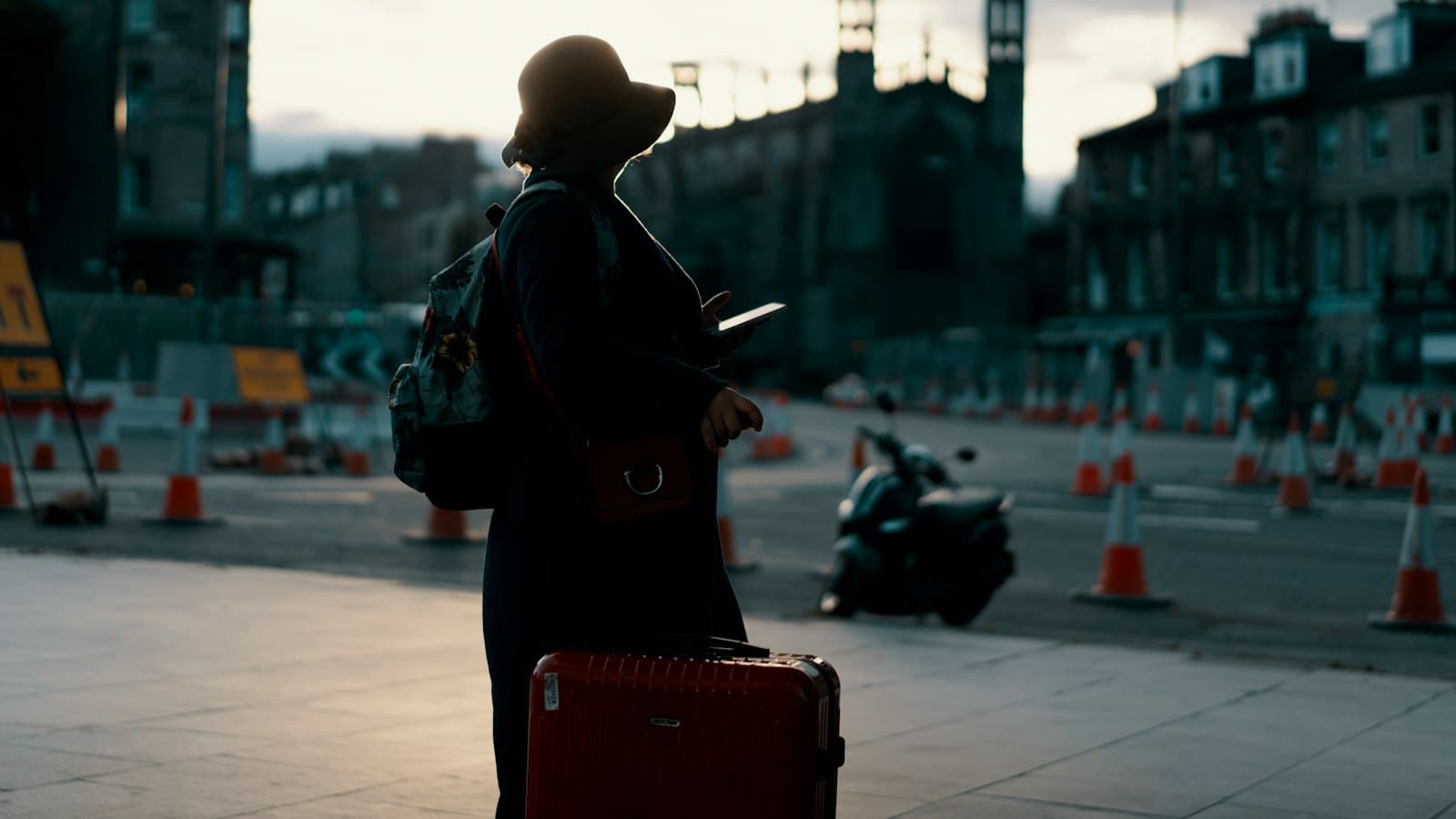
Moving to New York City from another country is two moves at once: the physical one — flights, a visa, a suitcase that never quite closes — and the quieter one of working out where you will actually sleep on your first night. If you are doing this without a US credit history, the housing half can feel like the part most likely to go wrong. It does not have to. With a clear timeline and the right paperwork in hand, you can rent a room in NYC from abroad and walk in the door already knowing the room is yours. This guide follows the whole arc of arriving — when to start, what to carry, how to avoid the traps, and what your first week tends to look like — for the newcomer moving to NYC with no US credit.
Start the search earlier than feels necessary
The most common mistake newcomers make is treating housing as something to sort out once they land. New York moves faster than that, and the rooms that match your dates are often spoken for weeks ahead.
A workable rhythm looks roughly like this:
- Eight to twelve weeks out. Begin researching neighborhoods and room types while your visa and program paperwork are still being finalized. You are not committing yet; you are learning the map and the price of things.
- Six to eight weeks out. Shortlist a handful of buildings or listings that accept renters without a US file, and start conversations. Ask how approval works and which documents they need, so nothing surprises you later.
- Three to five weeks out. Secure your room. Booking before you land is the whole point: it turns your first day in the city into a move-in rather than a frantic search with jet lag.
- The final weeks. Confirm the move-in logistics — key handover, arrival time, what is already in the room — and keep digital copies of everything you have signed.
Committing to a place you have not stood inside can feel like a leap. The way to make that leap safely is not to wait until you arrive; it is to choose a process that gives you real documentation and a clear, written agreement before any money changes hands.
Gather your documents before you leave home
Without a US credit score, your paperwork is what speaks for you. The reassuring part is that most of it is exactly what you already need for the move, and it is far easier to collect while you still have access to your own bank, employer, or school.
Pack digital and paper copies of:
- Your passport and visa. Your identity and your right to be in the country, in one place.
- Your offer or enrollment letter. An employment offer, an internship confirmation, or a university enrollment letter shows why you are coming and roughly how long you will stay.
- Proof of funds or income. Recent bank statements, a scholarship or funding letter, or pay documentation show that the rent will arrive each month. This is the single most persuasive thing a newcomer can put on the table.
- A reference or two. A note from a previous landlord, a university, or an employer adds a human voice to the file.
Keep all of it in one folder, clearly named, and in English where you can — a translated bank statement or enrollment letter saves a round of back-and-forth later.
Two phrases you will hear constantly in New York are credit check and guarantor. As a newcomer you will likely have neither, and that is the normal starting point, not a dead end. Because each one works differently, we have given them their own walkthroughs: start with renting a room with no credit check for the score side, and renting a room without a guarantor for the co-signer side. This guide stays on the journey; those two cover the mechanics.
Renting sight-unseen without getting burned
Signing for a room you cannot visit is where newcomers are most exposed, because the distance that makes it necessary is the same distance a scammer hides behind. You can protect yourself without a lawyer by learning to spot a familiar pattern.
Be cautious when you see:
- Pressure to send money fast, especially by wire transfer, gift card, or anything that cannot be traced or reversed.
- A deal well below what everything else costs, paired with a reason you must act this minute.
- A refusal to video-call or to show you the specific room on a live walkthrough rather than stock photos.
- No written agreement, or a lease that will not name the parties, the address, the dates, and the exact amount owed.
- A landlord who is conveniently abroad, cannot meet or hand over keys, and asks you to pay into an unfamiliar account.
Reduce the risk by insisting on a live video tour of the actual room, getting every term in writing before you pay, confirming the building and address genuinely exist, and using a traceable payment method. A legitimate operator expects these questions and answers them calmly. Renting from an established coliving building rather than an anonymous listing removes much of this exposure, because there is a real company, a real address, and a real process standing behind the room.
Choosing a neighborhood you have never walked
Picking where to live in a city you have only seen in photos is less daunting once you anchor the decision to your own routine rather than to a highlight reel.
Ask yourself a few plain questions:
- How will you get to work or class? A shorter, simpler commute protects your time and energy more than almost anything else. Look at which subway lines serve both your front door and your destination.
- What do you want within a short walk? Groceries, a pharmacy, somewhere to study or sit, green space to reset in — these ordinary things decide how a neighborhood actually feels day to day.
- How much calm do you want after a long day? Some parts of the city stay loud late; others settle into something quieter and more residential.
The Upper West Side is a dependable answer to those questions for students, interns, and early-career arrivals alike. It sits between Amsterdam Avenue and Broadway, with Central Park two blocks to the east and Riverside Park three blocks to the west, so green space is never far. The 1 train and the B and C trains at 86th Street connect you down into Midtown and beyond, and you are near Columbia, Juilliard, and Lincoln Center, along with cultural anchors like the Beacon Theatre, Symphony Space, and the American Museum of Natural History. It reads as calm and classic rather than frantic — an easier landing for a first address in a new country.
What your first week tends to look like
The first seven days are mostly small, practical errands, and they go smoothly when your housing is already settled.
Expect to spend that week:
- Getting a local phone plan and sorting payments, so you can receive codes, confirmations, and the occasional delivery.
- Learning your immediate blocks on foot — the nearest grocery, pharmacy, laundry, and the subway entrance you will use most.
- Handling the arrival admin of your program — orientation, an ID card, campus or office logistics.
- Beginning, slowly, to build a US financial footprint, which over time becomes the credit history you did not have on arrival.
None of this needs to happen in a panic, and all of it is easier when you are not simultaneously hunting for somewhere to live. A furnished room with the essentials already in place means your energy goes into starting your life here, not into buying a bed and waiting on a utility connection.
How a document-based room fits the newcomer's arc
Everything above points toward one simple preference: a place that judges you on your documents, that you can secure before you fly, and that is ready to live in the day you arrive. That is the shape of a room at Amsterdam Place.
On the Upper West Side, a furnished private room runs on a document-based application — you provide ID and proof of your program or employment, and that is the review, with no US credit requirement, no US guarantor, and no broker fee. The rent is all-inclusive: utilities, wifi, and weekly cleaning of the shared spaces are built into one weekly figure, from about $420 per week as an example, and the terms are flexible rather than locked to a rigid year. A coworking lounge and community events are part of the building, which matters more than it sounds when you are new in town and do not yet know anyone.
Because you can book before arrival, the room is waiting rather than hypothetical when you land. If you want to see how this compares against the full range of housing for renters with no US credit or US guarantor, that hub maps every option side by side.
Your next step
Relocating to New York is a large thing made of many small, orderly steps, and housing is the one that makes all the others easier once it is settled. Start early, gather your documents while you are still home, choose a process built for renters without a US file, and you can arrive to a room that is already yours. When you are ready, reserve your room at Amsterdam Place and let your first day in the city be the start of living here, not the start of searching.