
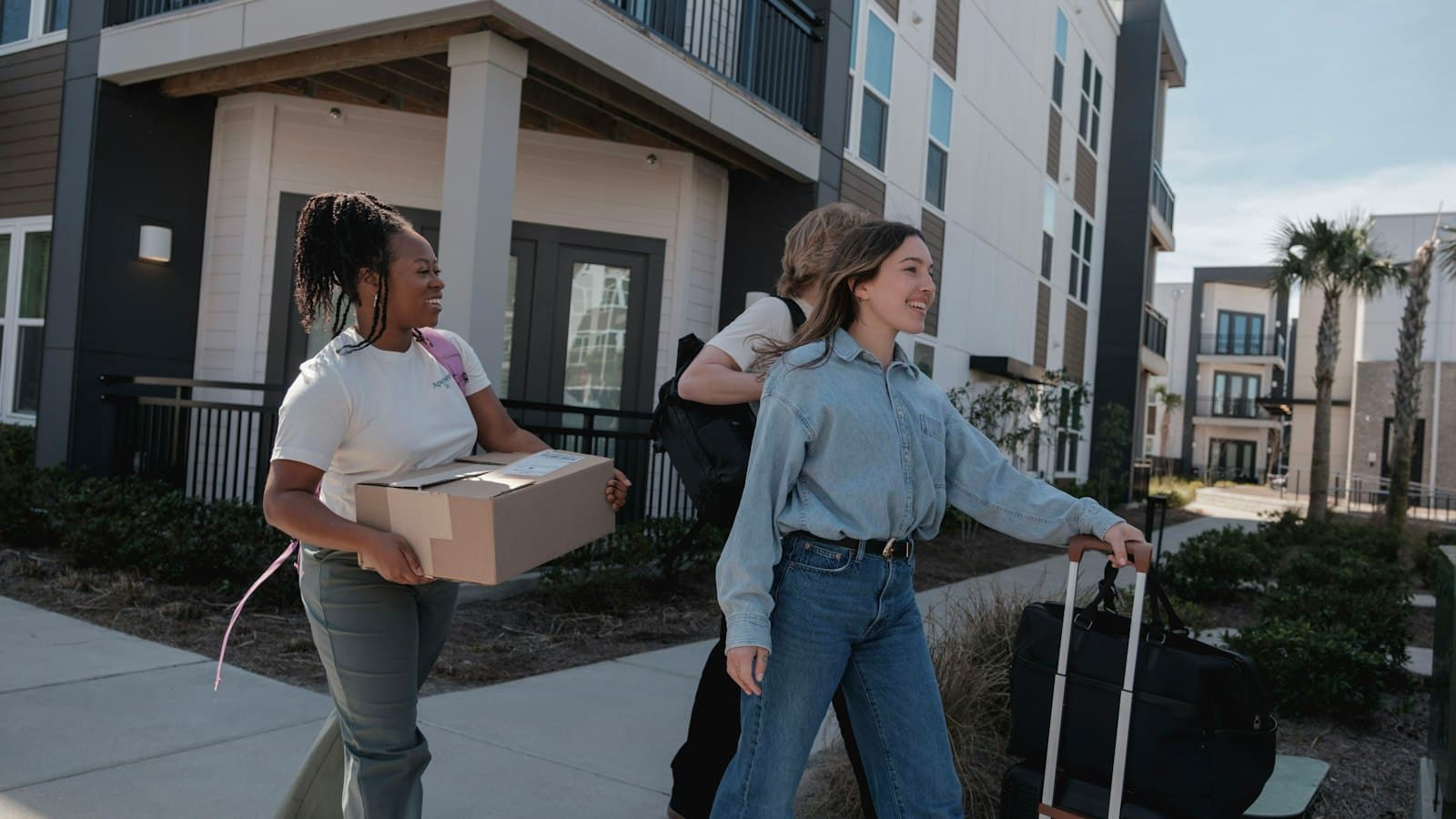
You signed a one-year lease with two other people, divided the rent three ways, and settled in. Then, five months later, one roommate announces a job in another city and a move-out date next month. It can feel like their problem to untangle, but when a roommate moves out early in NYC and your names share a single lease, it quietly becomes your problem too. Knowing exactly what happens next, before it happens, is the difference between a manageable handoff and a bill you never saw coming. If you are still weighing whether to share an apartment at all, our overview of finding roommates in NYC is the place to begin; this piece is about the narrower, sharper moment when one of them leaves before the lease is up.
This is a specific risk, not the whole picture. Our companion guide on the true cost of living with roommates in NYC adds up every upfront, ongoing, and risk cost of sharing, and it lists an early departure as one of those risks. Here we open that single risk up and walk through it step by step, because it is the scenario most people are least prepared for.
What the lease actually says
Start with the document, because everything downstream flows from it. Most NYC apartment leases signed by more than one person are joint and several. In plain terms, that typically means each tenant is responsible not just for their own share of the rent but for the entire rent, and the landlord can pursue any one of you for the full amount. The lease does not see "your third" and "their third." It sees one rent for one apartment, owed by the people who signed.
That is the clause that turns a roommate's departure into your exposure. When someone moves out, the rent owed to the landlord does not shrink by a third. The obligation stays whole, and it still has your signature on it. Read your lease for the exact language on assignment, subletting, and what counts as default — in most NYC leases those three sections decide how much room you have to maneuver.
The money you can suddenly owe
Here is the part that catches people. If a roommate leaves mid-lease and stops paying their share, the landlord is typically still owed the full monthly rent. If the two of you who remain cannot cover the empty room, the shortfall is a default on the whole lease, not just on the person who left.
In practice, that means a $1,400 share can briefly become a much larger number. Until a replacement signs on or the departing roommate keeps paying, the remaining tenants can be left covering the gap to keep the lease current. A verbal promise from the person leaving to "keep sending my part" is only as reliable as they are, and once they are in another city with new expenses, that promise is often the first thing to slip.
Talk to the landlord before anything else
The instinct is to quietly find a replacement and swap people without telling anyone. Resist it. In most leases, moving a new tenant in without the landlord's written consent is itself a violation, and it can void the protections you are counting on.
Instead, raise it early and in writing. Ask what the landlord requires: do they allow a lease assignment (the departing roommate comes off, a new one takes their place), a sublet (the room is re-let while the original tenant stays legally on the hook), or a full lease amendment? Landlords vary, and some will work with you, because a filled room paying on time is in their interest too. Getting their process in writing early also protects you if things later go sideways, since you will have a record that you acted in good faith.
Finding and vetting a replacement
Once you know what the landlord will accept, the search begins again, and it is real work. You are not just filling a bed; you are choosing someone whose rent reliability now affects yours. Screen as carefully as you did the first time: confirm they can actually afford the share, talk through expectations around guests, noise, and cleaning, and make sure the landlord approves them before anyone moves a box.
Timing rarely cooperates. The departing roommate's move-out date and the replacement's move-in date almost never line up cleanly, and any gap between them is a vacant room that someone still has to pay for. The faster you start, the smaller that gap tends to be — which is one more reason talking to the landlord on day one matters so much.
The security deposit question
Deposits are where move-outs get tense. On a joint lease, the security deposit was usually paid as one pooled sum for the whole apartment, and the landlord typically holds it until the lease actually ends, not when one person leaves.
So when a departing roommate asks for their share of the deposit back on their way out, the money is often not available to give. It is still sitting with the landlord against the end of the lease. The cleaner solution, when the landlord allows an assignment, is for the incoming roommate to "buy in" by paying their deposit share directly to the person leaving, so the pool stays whole and nobody is out of pocket. Agree on that number in writing among all parties. Settling it casually is how a friendship ends over a few hundred dollars months later.
When it escalates
Most early departures resolve with a replacement and some awkward spreadsheet math. But it is worth knowing the worst case, because that is what you are actually insuring against. If the rent goes unpaid and no one covers it, the landlord can move to recover the full amount from any tenant on the lease — including you — and can begin the eviction process against the apartment as a whole. A judgment or a damaged rental record does not distinguish between the roommate who left and the ones who stayed; it attaches to the names on the lease.
That is the quiet weight of joint-and-several liability. Your housing stability and your record can be shaped by a decision another person made for their own reasons, on their own timeline. You screened as well as you could, and it still was not fully in your hands.
A model where a departure isn't your problem
This is the exact exposure a coliving building is structured to remove. At Amsterdam Place on the Upper West Side, you hold your own room agreement rather than co-signing one lease for the whole apartment. Your agreement covers your room and your rate, and nothing else. When someone else in the building moves out early, their departure is simply not your financial problem, because you never shared a lease with them. There is no empty share to cover, no scramble to find and vet their replacement, and no pooled deposit to untangle.
The rest follows from the same structure. Each furnished private room is one all-inclusive rate, around $420 per week as an approximate example, covering rent, utilities, gigabit Wi-Fi, and weekly cleaning of the shared spaces. There is no broker fee, the room is already furnished, and the lease terms are flexible with a document-based approval process, so you are not locked into a year or carrying anyone else's obligations. The community events and coworking lounge give you the social side of shared living — you still have neighbors and company — without tying your rent to their choices. If you want to see how the two routes compare more broadly, our roommates versus renting a room in NYC piece puts them side by side.
Protect yourself before the lease, not after
The best time to deal with a roommate moving out early is before you sign: read the assignment and sublet clauses, agree with your roommates in writing on what happens if someone leaves, and learn your landlord's process in advance. The second-best time is the moment someone tells you they are going — move fast, talk to the landlord, and get every number in writing. And if the idea of carrying someone else's share for a decision you did not make sounds like more risk than you want, you can reserve a private room at Amsterdam Place, hold your own agreement, and let other people's move-out dates stay other people's business.