
Accepting a summer analyst seat at Goldman Sachs settles a lot of questions about the next few months, but it opens one the offer letter never answers: where in New York you are actually going to live. It is worth slowing down for. The Goldman summer runs on a fixed calendar — a roughly ten-week program — and the room you come home to shapes every one of those weeks you are not at a desk.
If you are searching for where do summer interns at Goldman live in NYC, the honest answer is that they land in a handful of very different neighborhoods, and the one that fits depends on how you weigh cost, commute, and the kind of evening you want after a long day. One detail quietly drives most of that math: Goldman's main office is not in the classic Wall Street core most people picture. The firm's global headquarters sits at 200 West Street, in Battery Park City on the western edge of Lower Manhattan, a short walk from the World Trade Center. Where you base yourself is really a question of how you get to that address, and what you want waiting for you when you leave it.
What a Goldman summer actually looks like
The summer analyst program is a compressed audition. It runs about ten weeks, typically across June, July, and August, and the goal at the end of it is a return offer. The days start early, the nights can run late, and the calendar does not flex around your housing. That shape matters more than any single amenity when you are deciding where to live.
It has two practical consequences. First, you want a commute that is simple and predictable — one you can do half-awake without a maze of transfers to think about at the end of a long day. Second, and interns consistently underrate this, you want somewhere that actually lets you reset. The office will be intense for ten straight weeks. The neighborhood you come home to is the part of the summer that belongs to you.
The neighborhoods Goldman interns actually weigh
Three options come up again and again for an incoming Goldman class, and each is a genuinely different bet.
Downtown, near 200 West. Living in or near the Financial District and Battery Park City puts you a short walk or a couple of stops from the office. The appeal is obvious: minimal commute, roll out of bed and you are there. The trade is that this corner of the city is dense and work-first, it empties out on weekends, and short-term rooms for a ten-week window are genuinely hard to arrange and tend to be the most expensive in the area.
Murray Hill. The long-standing young-finance enclave in the East 30s is a middle path — lively, full of people on similar schedules, and reasonably central. It is a popular landing spot, though it leans toward a share-house arrangement that still wants a lease, furniture, and setup you may not have time for.
The Upper West Side. The third bet is to live in a calm, genuinely residential neighborhood and commute in. You accept a longer trip to the desk in exchange for parks, quiet side streets, grocery stores, and a block that still feels like a neighborhood after 8 p.m. This is where our building sits, so let us be direct about the geography rather than dress it up: Amsterdam Place is on the Upper West Side, at 205 and 207 West 85th Street. It is not downtown, and a Goldman intern living here would commute to 200 West. What the block offers is not closeness to the office — it is the quality of the hours after it.
The honest commute from the Upper West Side to 200 West
Here is the real transit picture, without invented numbers. Both of the clean routes run close to a straight line down the West Side of Manhattan, which is the part that makes them easy to live with.
The 1, and the 2/3 express
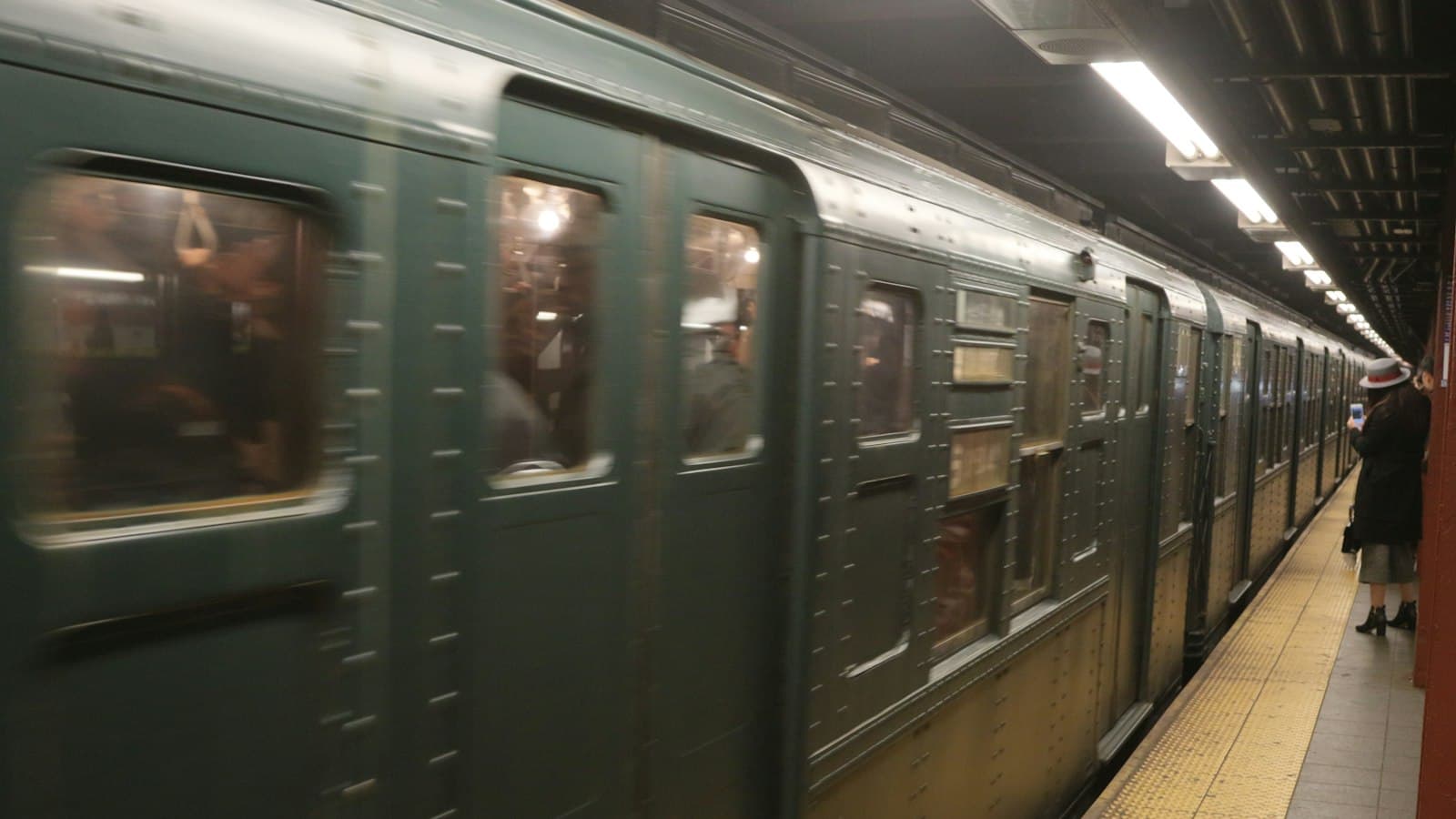
West 85th Street sits two short blocks from the 1 train at 86th Street and Broadway. The 1 runs straight down the West Side toward Lower Manhattan, and it shares its track with the 2/3 express, which you can pick up at the 72nd Street station just down the line. The express skips the local stops and carries you down to Chambers Street, a few minutes' walk from 200 West. Riding the 1 the whole way is simpler; transferring to the 2/3 trades one quick change for a faster trip.
The A/C down the West Side
Your second option starts at 86th Street and Central Park West, where the B and C trains stop. The A and C run down the Eighth Avenue line to Chambers Street and the World Trade Center — which puts you about as close to Goldman's door as the subway gets, on the same side of the island as the office.
Door to door, plan for roughly 30 to 40 minutes depending on the hour. That is a real commute, and it is worth saying plainly: you will spend time on the train morning and evening. What makes it manageable is that it is simple — one direction, down the West Side, on lines you will know by heart within a week. Many interns use the ride to read, clear messages, or simply switch off before and after a long day. For the broader finance-intern picture — the general downtown commute and daily rhythm across banks — our companion guide to finance intern housing on Wall Street covers it in more depth.
Downtown convenience versus a calmer base uptown
The core tradeoff comes down to this. A room steps from 200 West buys you time in the morning, but you spend your summer in a part of the city built around offices, at the highest short-term prices, in rooms that are hard to secure for exactly ten weeks. A base on the Upper West Side costs you that daily train ride, but it gives you a neighborhood in return.
And the Upper West Side is residential in the best sense. Central Park is two blocks east; Riverside Park runs along the Hudson to the west. Between them are grocery stores, coffee shops, bookstores, and streets that are genuinely quiet at night. After a fourteen-hour day, that quiet is not a perk — it is the thing that lets you recover for the next one. For a rare free hour you are near Lincoln Center, the American Museum of Natural History, and the campuses around Columbia and Juilliard, so there are always people keeping unusual hours nearby. When your one reliable decompression is the walk from the subway to your door, it helps for that walk to pass a park rather than a shuttered lobby.
What all-inclusive takes off your plate
A ten-week stay creates a specific problem. Most standard New York leases run twelve months, unfurnished, with a broker fee and paperwork that assumes you are staying for years. That is a poor match for a summer analyst with no time to shop for furniture or set up utilities.
Coliving is built for exactly this gap. At Amsterdam Place the rooms are furnished and the rate is all-inclusive, covering rent, utilities, Wi-Fi, and weekly cleaning of the shared spaces — as an approximate example, somewhere around $420 a week, billed every four weeks. There is no broker fee, and approval is document-based: no US credit score and no US guarantor required, which is often the real obstacle for someone arriving from another city or from abroad. Lease terms are flexible, with a four-week minimum that lines up cleanly with a ten-week program. One honest note on the rules: New York's Local Law 18 prohibits rentals under 30 days, so any legitimate short-term option in the city starts at a month — a four-week minimum is simply the floor the law sets, not a catch.
The building is a coliving residence, not an intern dorm — the household is a mix of interns, students, remote workers, and people relocating to the city — but that mix is part of why it works for a work-heavy summer. There is a coworking lounge for the nights you bring something home, and community events when you have an evening free. You show up, the room is ready, and the setup burden you do not have time for simply is not there.
Where this fits the bigger finance-intern picture
Goldman is its own case because of that 200 West address and the ten-week clock, but the underlying logic is shared across finance internships. If your seat is on a banking desk specifically, where the defining constraint is the length of the hours, our related piece on investment banking intern housing in NYC weighs the same commute-versus-recovery question for that schedule. And for the full range of neighborhoods, lease types, and costs across the city, start with our overview of NYC intern housing, which lays the options out side by side.
Whichever way you lean, the choice is really about your other sixteen hours a day. Downtown puts you next to the desk. The Upper West Side bet is the opposite: a simple ride down the West Side in the morning, and a real neighborhood to come home to at night.
When you are ready to settle it, you can reserve your room at Amsterdam Place and take housing off a very full plate — rooms for the summer class fill early, and a four-week minimum lines up neatly with a ten-week Goldman summer.