
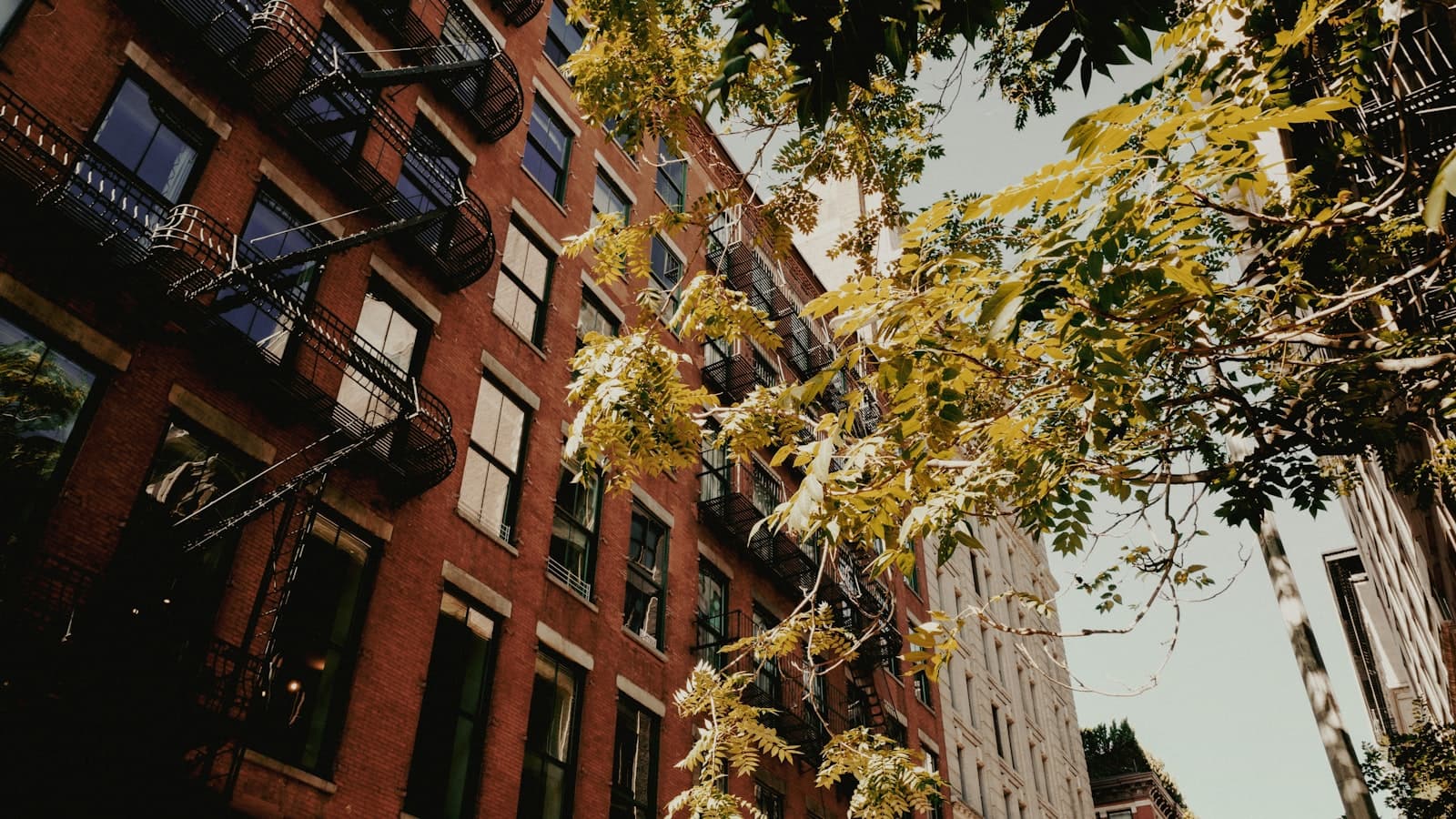
The Upper West Side is one of Manhattan's most steadily residential neighborhoods, which makes it one of the more sensible corners of New York City to search for a no-broker-fee room. It is a long, narrow stretch of prewar apartment houses, brownstone side streets, and two parks doing the bordering, and its housing stock lends itself naturally to room shares and direct rentals. This guide is about the neighborhood itself: why the Upper West Side suits a room search, where within it to look, how the subway quietly decides your commute, and what a no-fee search looks like on these specific blocks.
If you want the general mechanics of a no-fee search first, two companion pieces cover that ground: our walk-through of how to rent a room in NYC with no broker fee and the citywide no-broker-fee furnished room guide. This post assumes you already know what a broker fee is and want to apply that knowledge to one neighborhood.
Why the Upper West Side Suits a Room Search
The neighborhood runs roughly from West 59th Street up to West 110th Street, bounded by Central Park on the east and Riverside Drive and Riverside Park on the west. That geography matters more than it first appears. You are never more than a few blocks from green space in either direction, and the avenues in between, Central Park West, Columbus, Amsterdam, and Broadway, carry the daily rhythm of the area: grocers, laundromats, coffee counters, and the kind of steady foot traffic that keeps a place feeling lived-in rather than transient.
For a room search specifically, three things line up. First, much of the housing is older and already subdivided, so apartment shares and spare rooms are common and rarely feel improvised. Second, the area is anchored by long-standing institutions, Columbia and Juilliard to the north, Lincoln Center, the Beacon Theatre, Symphony Space, and the American Museum of Natural History threaded through the middle, which keeps demand for rooms consistent year-round. Third, the transit spine is genuinely good, which we will get to.
There is also a plain financial case. Avoiding a broker fee is often the single largest saving in a New York move. That fee, when it applies, typically runs 12 to 15 percent of a year's rent, a four-figure sum due before you have unpacked a box. Focusing a room search on no-fee routes in a neighborhood you actually want to live in is how you keep that money. When you rent a room in NYC this way, the neighborhood choice and the fee choice reinforce each other rather than competing.
How the Neighborhood Breaks Down
The Upper West Side is not one uniform place. It reads as three loose zones, and knowing which one you are looking at changes what a room search feels like.
The lower blocks near Lincoln Center
The 60s and low 70s, closest to Lincoln Center and Columbus Circle, sit at the busier, more polished end of the neighborhood. Buildings here tend to be larger and more managed, streets are wide, and you are a short walk from Central Park's southwest corner and the shops and transit around Columbus Circle. Rooms in this zone put you closest to Midtown and to the cultural core, though the trade-off is that the pace is a notch faster than the blocks farther north.
The core in the 70s and 80s
The heart of the Upper West Side, roughly the 70s through the 80s, is the classic residential middle. This is the postcard version of the neighborhood: tree-lined side streets, brownstone stoops, corner delis, and a calmer feel once you step off Broadway. It is central to nearly everything, the museum, the parks on both flanks, and quick access up or down the island. If you want the neighborhood at its most balanced, this is where most room searches settle, and it is where Amsterdam Place sits, at 205 and 207 West 85th Street.
Manhattan Valley and the upper 90s toward Columbia
North of the mid-90s, the neighborhood shifts into Manhattan Valley and the blocks that lead up toward Columbia near West 110th. The streets here feel a little more neighborhood-grocer than gallery-district, the buildings vary more, and the area sits closest to the northern campuses and to Morningside Heights just above the boundary. For a room search, this zone often offers more turnover and a somewhat quieter texture, while still keeping you on the same transit lines as the rest of the Upper West Side.
The Subway Decides Your Real Commute
On the Upper West Side, the difference between two rooms ten blocks apart is often really a difference in which train you will ride every day. Two lines define the neighborhood, and they behave differently.
The 1, 2, and 3 run under Broadway, the west-side spine, with stations every handful of blocks. The 1 is the local, stopping nearly everywhere, which is convenient if your room sits between express stops. The 2 and 3 run express, skipping ahead to the major junctions, so a room near an express stop such as 72nd or 96th Street can meaningfully shorten a downtown trip.
On the east edge, the B and C run beneath Central Park West. The C is the local and the B runs on weekdays, and both feed toward Midtown and downtown along a different route. A room closer to Central Park West leans on these trains; a room closer to Broadway or the river leans on the 1/2/3.
The practical takeaway: before you commit to a room, trace the actual walk to the nearest station and check whether it is a local or an express stop. That single detail shapes your mornings far more than the exact block does.
Running a No-Fee Search on These Blocks
Within the Upper West Side, two no-fee routes tend to work best. The first is owner-direct: renting from a landlord or an in-house leasing office with no broker in the chain, which is more findable here than in newer parts of the city because so much of the stock is long-held and locally managed. The second is in-building coliving, where an operator runs the property and leases rooms directly, so there is no broker fee by design and the room usually arrives furnished and ready. For the full checklist on vetting either route, and the scam patterns to watch for, lean on the two companion guides linked above rather than repeating the mechanics here.
A neighborhood-specific note on timing: rentals shorter than 30 days are not legal in most buildings under NYC Local Law 18 unless the host is registered and present, so a genuine Upper West Side room search means monthly or longer stays, not a patchwork of short lets. Plan around a real move-in date.
This is where in-building coliving earns its place on the Upper West Side. Amsterdam Place, on West 85th Street in the neighborhood core, offers rooms from $420 per week, billed every four weeks, all-inclusive, with no broker fee, no US guarantor, and no US credit required. That structure removes the two friction points that trip up most room searches here at once: the upfront broker fee and the paperwork hurdles of guarantors and credit history. If you want to weigh the wider trade-offs of this model, our overview of coliving on the Upper West Side puts it in context.
Putting It Together
A good Upper West Side room search is really three decisions stacked together: the zone that fits your daily life, the train that will actually carry your commute, and a no-fee route that keeps the broker fee out of your move-in math. Get those three aligned and the neighborhood does the rest, parks on both sides, a walkable middle, and transit that reaches most of the island without a transfer. Whether you land in the busier lower blocks, the residential core, or the quieter reaches toward Columbia, choosing a no-fee path is how you rent a room in NYC without surrendering thousands of dollars before you have your keys.
Ready to see a no-broker-fee room in the heart of the Upper West Side? Reserve your room at Amsterdam Place and skip the fee, the guarantor, and the credit check entirely.